Saigaks, cute but endangered species of Russian wildlife
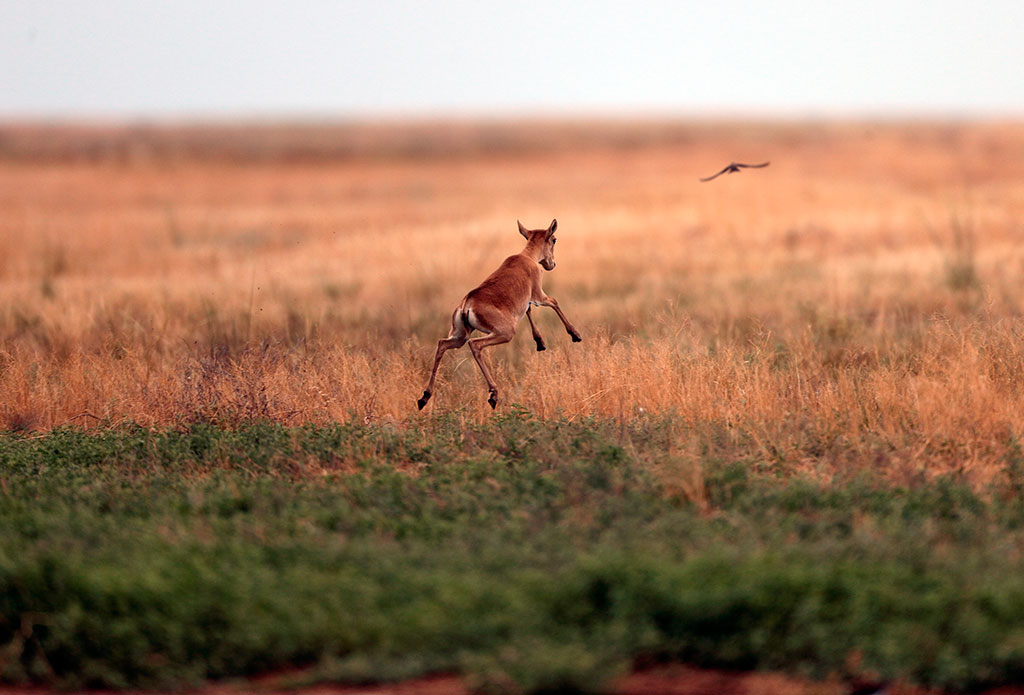
More than a few programs have been developed by various organizations. But often the situation changes before the programs can be implemented. This year, under the World Wildlife Fund's European Initiative for Large Herbivores, funded by the government of the Netherlands, a small grant — the first of its kind — was allocated for the protection of saigaks in Kalmykia, Russia.
Evgeniy Polonskiy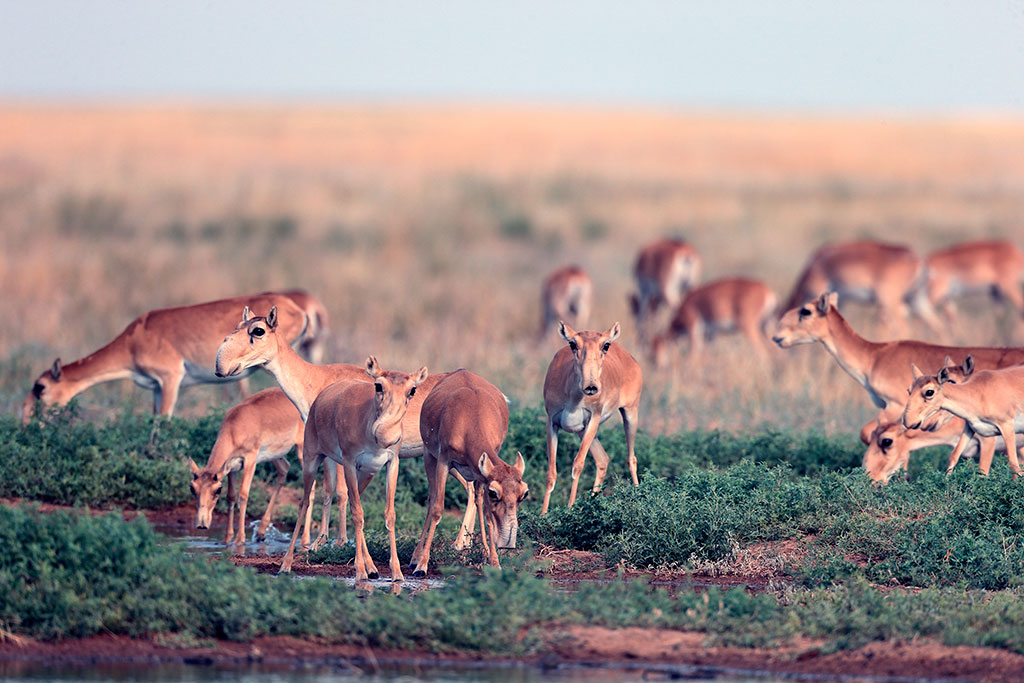
Saigaks are wild ungulates that live in the steppes of Russia. They inhabit the south-east of European Russia, in the Lower Volga region (pictured: Astrakhan saigaks). All summer, herds of several dozen saigaks roam the steppes, grazing on the succulent shoots of various herbs (orach, wormwood, wheatgrass, glasswort, etc.), which provide all necessary water and nutrients for the organism.
Evgeniy Polonskiy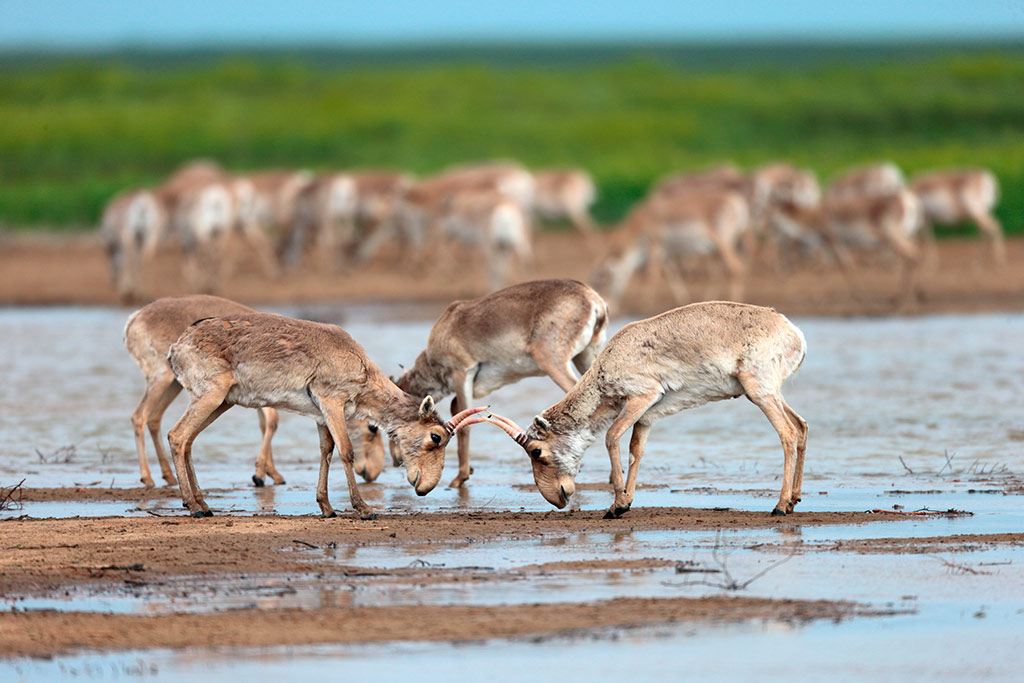
The males have small, translucent, light-colored horns with dark tips, while the females are hornless. Their long, thick fur, which grows in time for winter, protects them against ferocious snowstorms. The largest adult specimens do not exceed 60 kg in weight: the males are on average about 45 kg, and the females 30-35 kg.
Evgeniy Polonskiy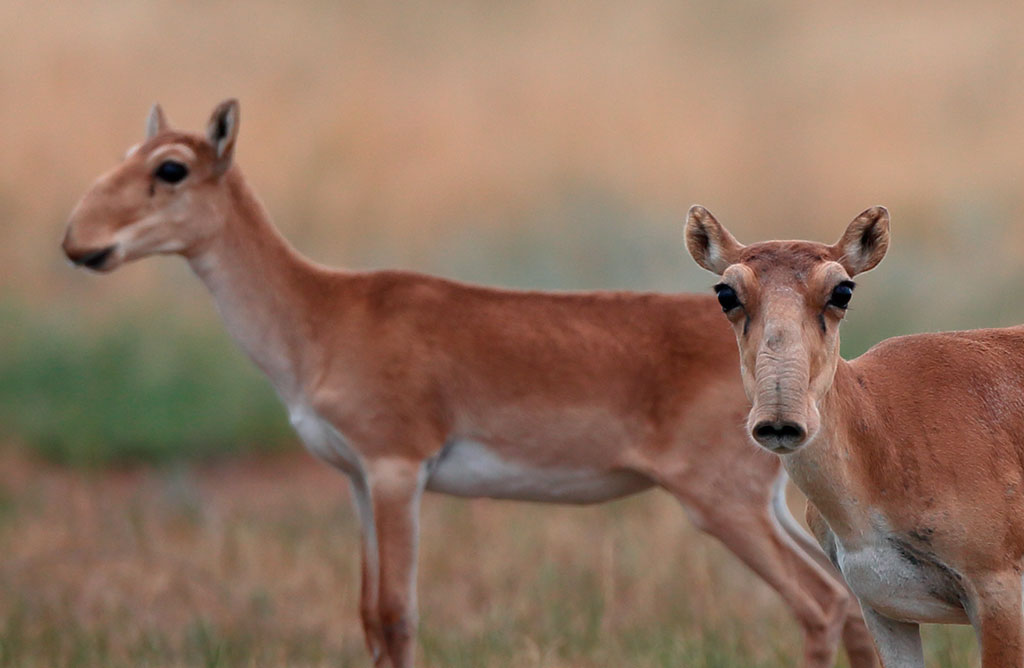
The saigak is unmistakable by its oversized head and humped, swollen face, the end of which resembles a small proboscis. The hook-nose is the result of the excessively enlarged nasal cavities that perform the role of a bodily organ, warming the cold, winter air that saigaks inhale when galloping.
Evgeniy Polonskiy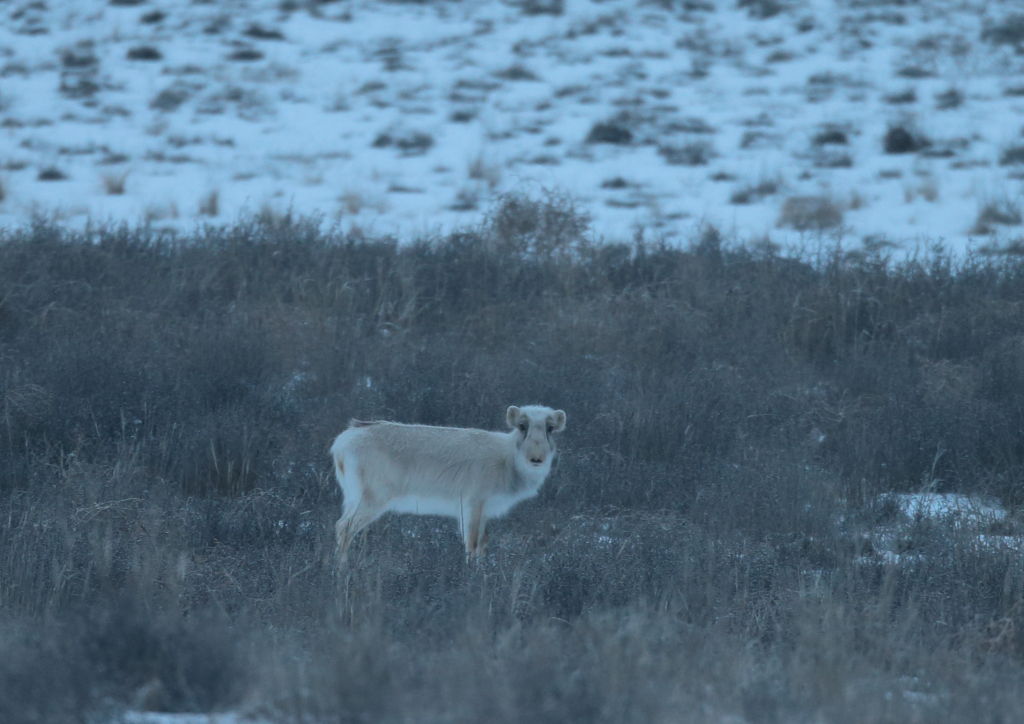
Come wintertime, they group themselves into thousand-strong herds and move south to more favorable climes, sometimes covering hundreds of miles. In summer, when the grass is frazzled and the water basins parched, they head north. That means that saigaks are permanently on the move.
Evgeniy Polonskiy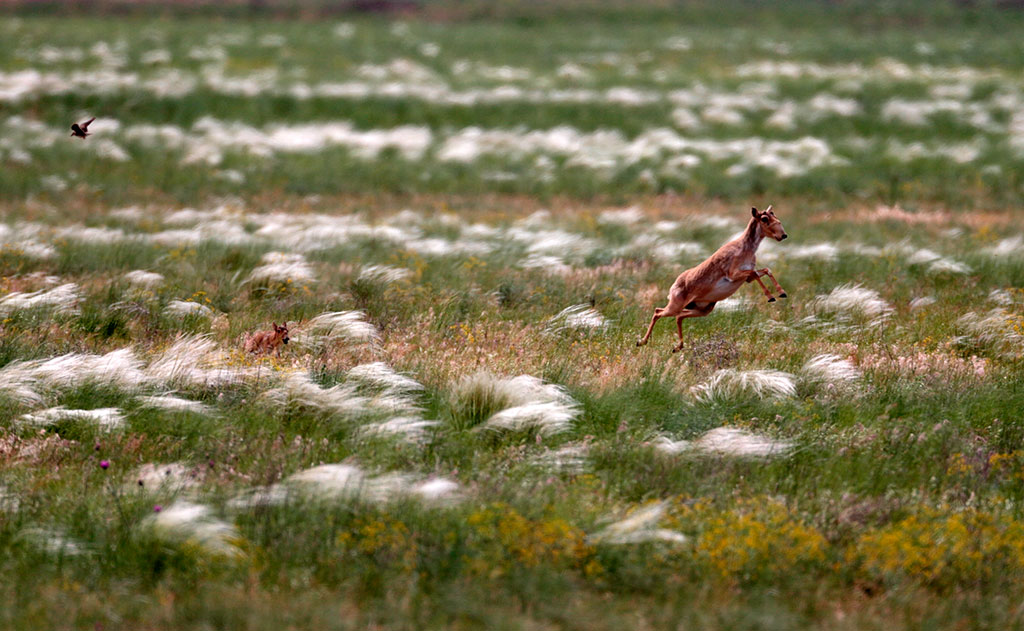
The migratory herds can number thousands or tens of thousands, all moving in a continuous flow. Such mass concentrations during the migration period do the animals a disservice: they are very easy to locate and shoot. For adult saigaks, the most dangerous predator is the steppe wolf, which they must outrun or be killed.
Evgeniy Polonskiy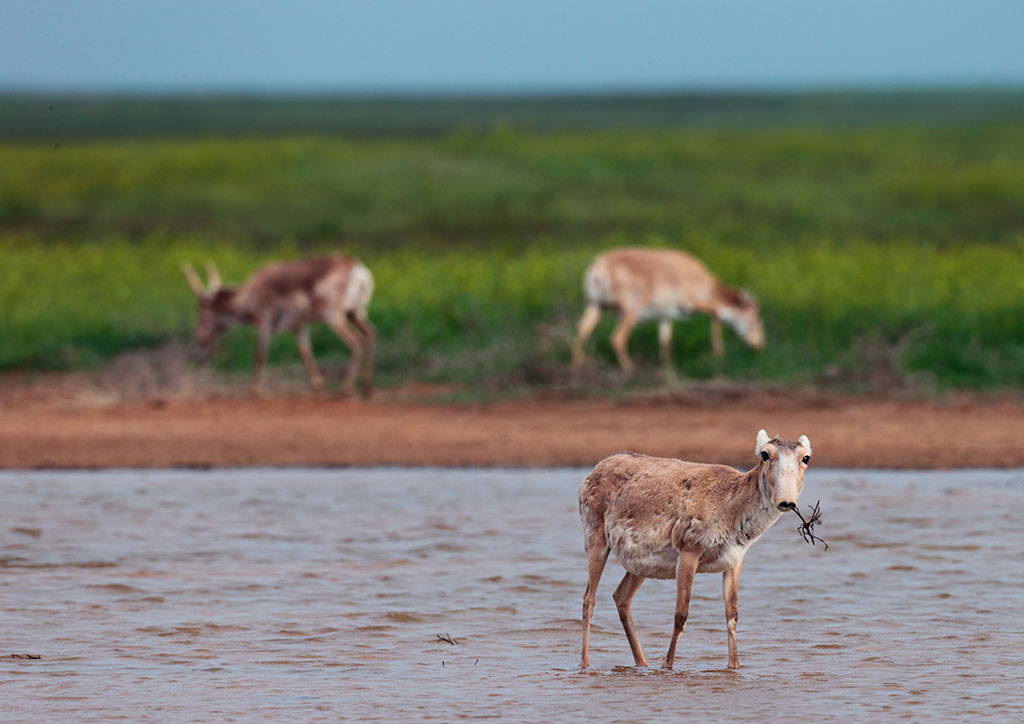
Changing the migration route leads to serious problems. Imagine that a migrating herd, many thousands strong, stumbles upon a deep, man-made canal: unlike a natural river, where the water is shallow at the edges, allowing the animals to wade in and gradually start swimming, the banks of a canal are steep. Or a pipeline. Do they clamber over it?
Evgeniy Polonskiy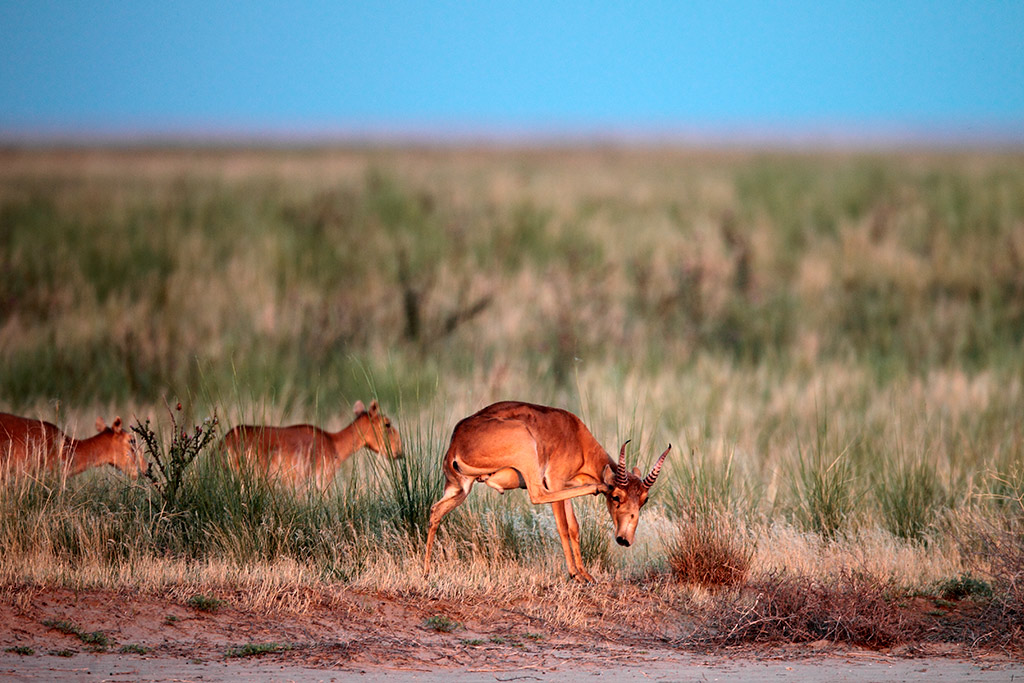
There's a snarl-up, some try to find a detour, others get crushed, some give birth prematurely. In cramped conditions, animals weaken from insufficient fodder, and disease spreads more easily — in general, not a jolly scene. On the other hand, if the migration routes are known, they can be factored in during construction projects, ensuring the animals' safety through controlling a single "corridor" instead of the boundless steppe.
Evgeniy Polonskiy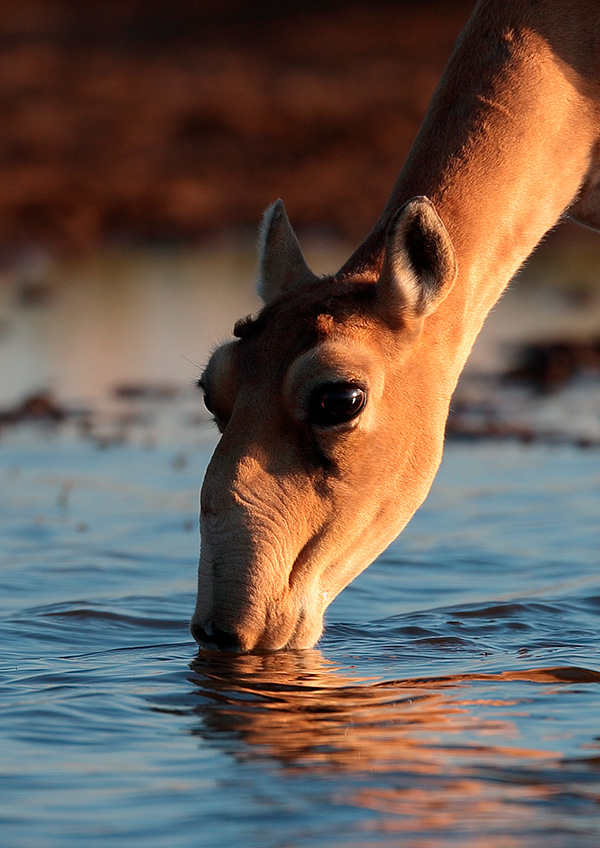
In the past decade, numerous problems have arisen in connection with saigaks. Poaching has sharply increased due to high demand for saigak meat and especially horns, which are prized in traditional Chinese medicine. The most barbaric form of poaching, which flourished in the early 1990s, was when the animals were hunted only for their horns, littering the steppe with the corpses of hundreds or thousands of saigaks, even tens of thousands.
Evgeniy Polonskiy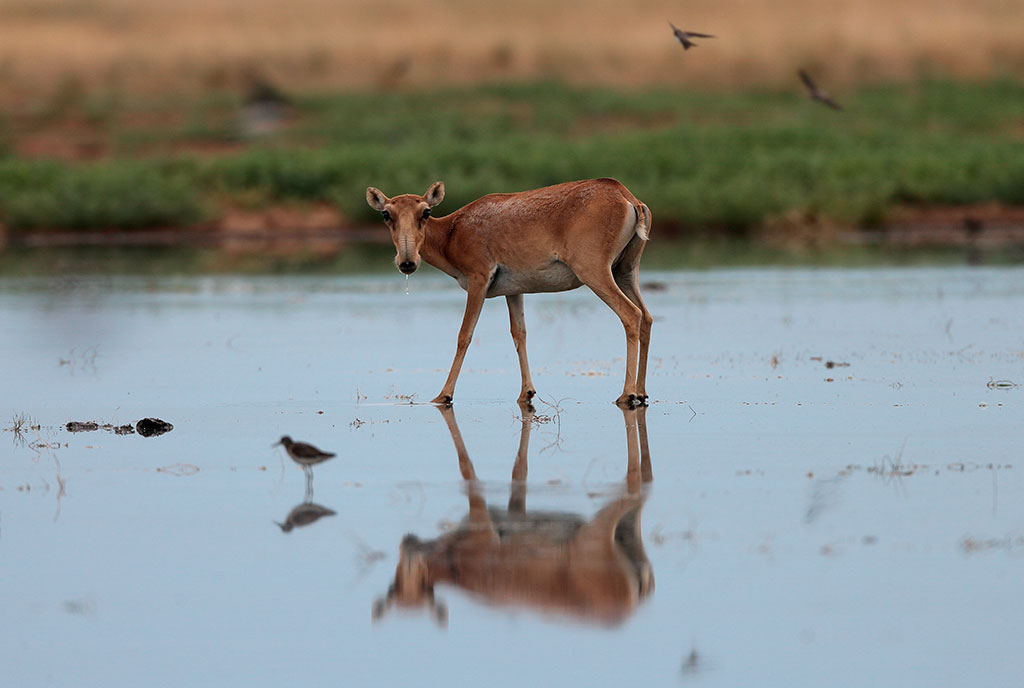
The number of saigaks is constantly changing: as the main target for hunters in the steppe, they sometimes totter on the verge of extinction. Then again, during the migration periods, the densely populated herds of saigaks run into the tens of thousands. The question is how to utilize them without turning the process into a horrible massacre.
Evgeniy PolonskiyMore than a few programs have been developed by various organizations. But often the situation changes before the programs can be implemented. This year, under the World Wildlife Fund's European Initiative for Large Herbivores, funded by the government of the Netherlands, a small grant — the first of its kind — was allocated for the protection of saigaks in Kalmykia, Russia.
Evgeniy PolonskiyAll rights reserved by Rossiyskaya Gazeta.
Subscribe
to our newsletter!
Get the week's best stories straight to your inbox